


Ranthambore vs Bandhavgarh vs Kabini: Which Indian Park Gives You the Best Tiger Photography Shots?
I've sat in the back row of a canter at 6 AM in Ranthambore watching the sun turn the ruins of a 10th-century fort gold while a tigress and her cubs strolled past like they owned the place (they did), and I've also spent three fruitless mornings in the same park photographing nothing but langurs and my own disappointment. That's the thing nobody tells you about tiger photography in India — the park you choose matters almost as much as the gear in your bag, and the honest answer to "which is best" depends on what kind of photograph you're actually trying to make.
Ranthambore: Dramatic Backdrops, Unpredictable Odds
Ranthambore's biggest selling point for photographers isn't the tigers themselves — it's everything around them. The park is dotted with ancient chhatris, lake edges, and the crumbling Ranthambore Fort looming over Padam Talao, which means even a mediocre sighting can turn into a genuinely striking frame. Zones 2, 3, and 10 are where most of the fort-and-lake magic happens, and if you can pull a permit for one of these in October-November or March-April, you're set up for images with real context, not just an animal in scrub.
The catch is booking. Ranthambore runs a strict zone-allocation system, and you don't get to choose your zone freely — it's assigned, often randomly, when you book online. That means a photographer chasing a specific composition might get stuck in Zone 6 or 7, which are drier, flatter, and considerably less scenic. Sighting probability across a 3-day visit is generally strong (I'd put it around 70-80% in peak season), but the *quality* of the shot varies wildly depending on which zone you land.
Light here is workable but not always forgiving — the terrain is open dry deciduous forest, so morning light comes in hard and fast, and by 8:30 AM you're often dealing with harsh overhead sun rather than that soft golden glow everyone wants.
Bandhavgarh: The Density Champion
If pure numbers are your priority, Bandhavgarh wins. This park has one of the highest tiger densities in India, and Tala zone specifically has produced legendary sightings for over a decade. I've had guides tell me they can predict, almost to the hour, when a particular tigress will cross a certain nullah — that's how well-mapped the resident tigers are here.
For photographers, this density translates into more frequent, closer, and longer sightings than Ranthambore typically offers. The sal forest terrain also does something wonderful for images — dappled light filtering through tall sal trees creates a layered, almost painterly background that's very different from Ranthambore's open scrub. Early morning safaris (April to June especially) can give you tigers walking straight down forest tracks with soft, diffused light hitting them from the side — genuinely some of the best light conditions of any Indian park.
The downside: Tala zone is wildly oversubscribed, and getting a permit there during peak months requires booking months in advance or going through a resort with connections. Magadhi and Khitauli zones are decent alternatives but statistically less productive.
Kabini: The Backwater Advantage
Kabini, in Karnataka's Nagarhole National Park, plays a completely different game. It doesn't have Bandhavgarh's density or Ranthambore's ruins, but it has something neither of them can offer — a massive backwater reservoir that draws animals to open, photogenic banks, especially in the dry months of March through May when water levels drop and expose wide grassy margins.
This is where Kabini quietly becomes one of the best national parks for tiger photography in India, particularly if you want images with negative space and clean backgrounds instead of cluttered undergrowth. Tigers here are shier and sightings are less frequent than Bandhavgarh, but when they happen along the backwater edge, the compositions are stunning — soft green or golden grass, still water reflections, and none of the visual noise you get in denser forest.
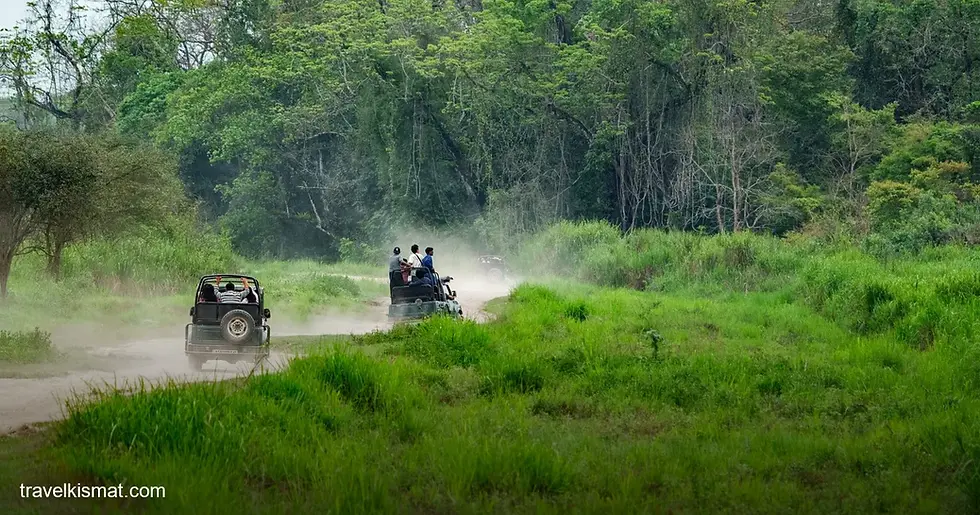
Kabini also runs boat safaris in addition to jeep safaris, which is unique among these three parks. A boat gives you a lower, more intimate angle and lets you drift quietly along the shoreline without engine noise spooking wildlife — something jeeps simply can't replicate.
Comparing Sighting Odds Honestly
Based on multiple trips and conversations with naturalists at all three parks, here's roughly how I'd rank realistic sighting probability over a 3-day, 6-safari trip in peak season:
- Bandhavgarh (Tala): 80-90%
- Ranthambore (good zones): 70-80%
- Kabini: 40-55%
Kabini's lower number isn't a flaw — it reflects a healthier, more naturally distributed predator population in thicker forest, which actually makes elephant and gaur photography excellent as a backup. But if your entire trip budget hinges on getting a tiger frame, Bandhavgarh statistically gives you the safest bet.
Light Quality and Golden Hour Comparison
This is where the three parks genuinely diverge for photographers who care about more than just "got the shot":
**Ranthambore** gives you the most dramatic light because of open terrain and man-made structures, but the window is short before it turns harsh.
**Bandhavgarh's** sal forest offers the longest usable golden-hour window because canopy filtering softens direct sun even mid-morning.
**Kabini's** backwater zones give you reflective light off water, which creates a completely different photographic palette — cooler, softer, almost cinematic in the March-May dry season.
“Photography is the story I fail to put into words. -- Destin Sparks”
Practical Booking Tips for Photographers
A few things I wish someone had told me before my first trip: book Bandhavgarh's Tala zone at least 60-90 days ahead through the official portal or a resort with permit access. For Ranthambore, request zones 2, 3, or 10 specifically when booking through an agent, even though allocation isn't guaranteed. For Kabini, stay inside the Nagarhole buffer zone properties that offer both boat and jeep safaris so you're not stuck with only one option if weather or water levels shift.
Also — carry a monopod, not a full tripod, for jeep safaris. Vehicles jostle constantly on forest tracks, and a monopod gives you stability without eating up space in a cramped canter.
Final Verdict
If I had to pick one park purely for photography odds and image quality combined, I'd lean toward Bandhavgarh for reliability and forest light, Ranthambore for dramatic storytelling backdrops, and Kabini for photographers who already have a few tiger shots and want something visually different. None of them is universally "best" — the best national park for tiger photography in India really depends on whether you're chasing volume, drama, or light.
Pack patience along with your telephoto lens. The forest decides the schedule, not you — and honestly, that's part of why this kind of photography stays addictive long after you've got the shot you came for.


Comments