


Gir National Park Safari Booking Guide 2026: Permits, Zones & Best Time to Spot Asiatic Lions
The first time you hear a lion roar inside Gir's teak forest, you realize no photograph or documentary prepares you for how the sound moves through the trees before you even see the animal. Gir is the only place on Earth where wild Asiatic lions still roam, and that single fact turns what could be a routine wildlife safari into something genuinely rare. But getting into the park isn't as simple as showing up at the gate with cash in hand — Gir runs on a permit-zone system that trips up a surprising number of first-time visitors, and if you don't understand how it works before you land in Sasan Gir, you can lose an entire day (or an entire trip) waiting for a slot that never comes.
How Gir's Zone System Actually Works
Gir National Park isn't one open area where jeeps roam freely. The core forest is divided into multiple numbered safari zones — roughly ten routes at present, though the forest department occasionally rotates or renumbers them, so treat the exact count as something to verify closer to your travel date. Each zone has a fixed, small number of vehicle permits per safari slot. Once those permits are sold for a slot, that's it — there's no overflow into another zone, and a sold-out zone doesn't mean the park is full, just that particular route is.
This matters because lion sightings vary noticeably by zone depending on recent movement patterns, water source proximity, and which prides are currently active in that stretch of forest. Local guides and forest staff usually have a sense of which zones have been productive in the days before your visit, but you won't get to choose your zone with much precision when booking online months in advance — allocation is often semi-random or based on availability at the time of booking.
Booking Your Gir Safari Permit
Permits for the core safari zones are issued through the Gujarat Forest Department's online booking system, and this is where planning ahead genuinely pays off. During peak season (December through February), popular time slots can sell out weeks in advance, especially for weekend safaris. Booking typically opens a set number of days ahead of the safari date — this window has changed in past years, so check the current rule before you plan your whole itinerary around it.
A few practical points worth knowing:
- Safaris run in two fixed daily slots — an early morning drive and an afternoon drive — and gate timings shift slightly with the season (earlier starts in summer, later in winter).
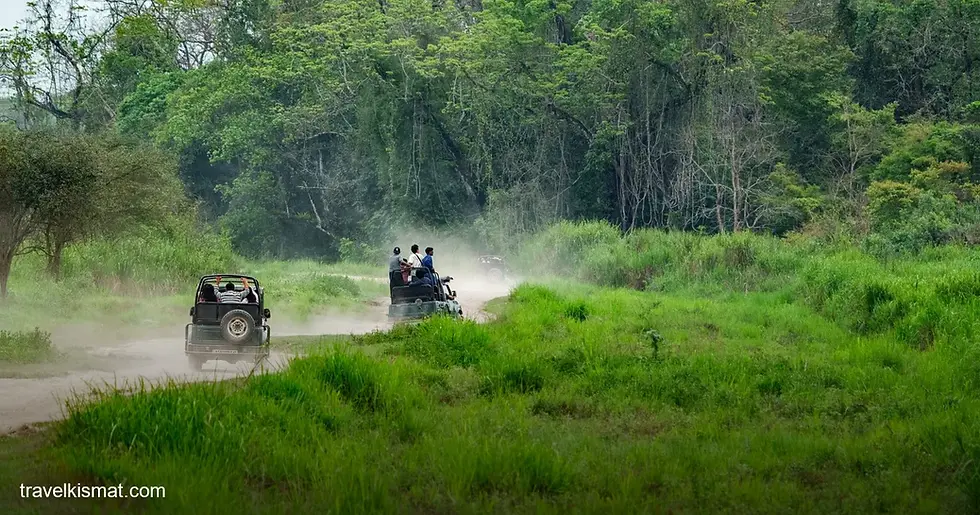
- Each vehicle permit is for a Gypsy-type jeep with a maximum passenger limit, plus a mandatory forest department guide who rides along.
- A limited quota is sometimes held back for on-the-spot or short-notice booking, but relying on this during peak months is a gamble, not a plan.
- Indian and foreign nationals are usually charged differently, and camera/video fees can be separate line items — confirm current rates on the official portal since forest fee structures do get revised.
If your dates are fixed and non-negotiable — say, you're traveling from abroad with a tight window — book the moment the online window opens rather than assuming you'll sort it out on arrival.
Best Time to Visit for Lion Sightings
The honest answer depends on what you're optimizing for. The park is open roughly mid-October through mid-June and closes for the monsoon, when forest tracks become unusable and the animals disperse into denser cover.
- **October–February**: Pleasant weather, greener landscape, comfortable for families and photography, but lions have more water sources scattered around and less reason to congregate near visible waterholes.
- **March–May**: Hotter, sometimes uncomfortably so by late morning, but this is when sighting probability genuinely rises. As temperatures climb and smaller water bodies dry up, lions and prey concentrate around the remaining permanent waterholes, which safari routes are designed to pass.
If a strong lion sighting is your priority over comfort, the summer slots are the better bet, even though it means an early sunrise safari to beat the heat. If you're traveling with young children or elderly family members, the cooler months make for a far easier day.
“Travel far enough, you meet yourself. — David Mitchell”
Devalia Safari Park: The Backup Plan Worth Knowing About
Separate from the core forest zones, Gir also has the Devalia Safari Park (sometimes called the Interpretation Zone), a fenced-off section of forest with a smaller area but a much higher near-guaranteed sighting rate. It operates on a different, simpler ticketing system with shorter waiting times, and importantly, it often stays open even when the main park is closed during the monsoon months.
Devalia isn't a substitute for the "real" wild safari experience — the enclosure is smaller and feels more managed — but it's a legitimate option if you couldn't secure a core-zone permit, if you're traveling with limited time, or if you're visiting during the off-season when core zones are shut. Many travelers do both: a core zone safari for the full wild-forest experience and Devalia as insurance against a no-sighting outcome.
Costs and What to Actually Budget
Exact fees change periodically, so treat any number here as a starting reference rather than gospel — check the forest department's current fee schedule before you finalize your budget. Broadly, expect to pay for the vehicle permit, the entry fee (which differs for Indian and foreign nationals), a guide fee, and an optional camera fee. On top of the official charges, most visitors also pay a separate amount to the jeep/gypsy operator for the vehicle and driver, since permits and vehicle hire are often booked through different channels depending on how you arrange your safari. Budget travelers typically join shared jeeps to split this cost; those wanting flexibility to stop, wait, and photograph without rushing usually book a private vehicle.
Common Mistakes First-Time Visitors Make
- Assuming they can book a safari on arrival during December–February — this backfires more often than not.
- Not confirming which zone they've been allocated, then being disappointed when it's a quieter route.
- Skipping Devalia entirely, then having no fallback when core-zone permits run out.
- Underestimating how much dust and heat the open gypsy exposes you to in summer — carry a scarf, sunglasses, and water.
- Booking only one safari. A single drive is a gamble; two safaris meaningfully improve your odds of a real sighting.
Before You Head Out
Gir rewards patience more than luck. Book early, keep Devalia as a genuine backup rather than an afterthought, and if a strong sighting matters more to you than comfortable weather, lean toward the hotter months when the forest concentrates its residents around water. Have you sorted your Sasan Gir stay yet, or still deciding which season to go for?


Comments